
Rosé is so much more than it is given credit for. In recent years, it has gained a reputation as a sweet treat, a cheap and cheery alternative to red wine that anybody can love. In this article, we’re going to try and shatter those misconceptions, and introduce you to the real rosé. To save from standing in the wine aisle, staring at labels, we’re also going to give you the lowdown on which rosé wines you should look out for this year.
The Rosé Factfile: Origins, Styles and Grapes
Where is rosé wine originally from?
The roots of rosé can be traced back to the Phoenicians and Ancient Greece, where they drank their wine with water, and crafted wine with a minimal amount of skin contact. Rosé as we know it today likely emerged from Phoenician settlements around the city of Marseille, 2,600 years ago. Over time, rosé wine has bloomed into a worldwide phenomenon, but its spiritual home will always be the South of France (Bordeaux and Provence in particular), where it found its first foothold in Western Europe.
How is rosé made?
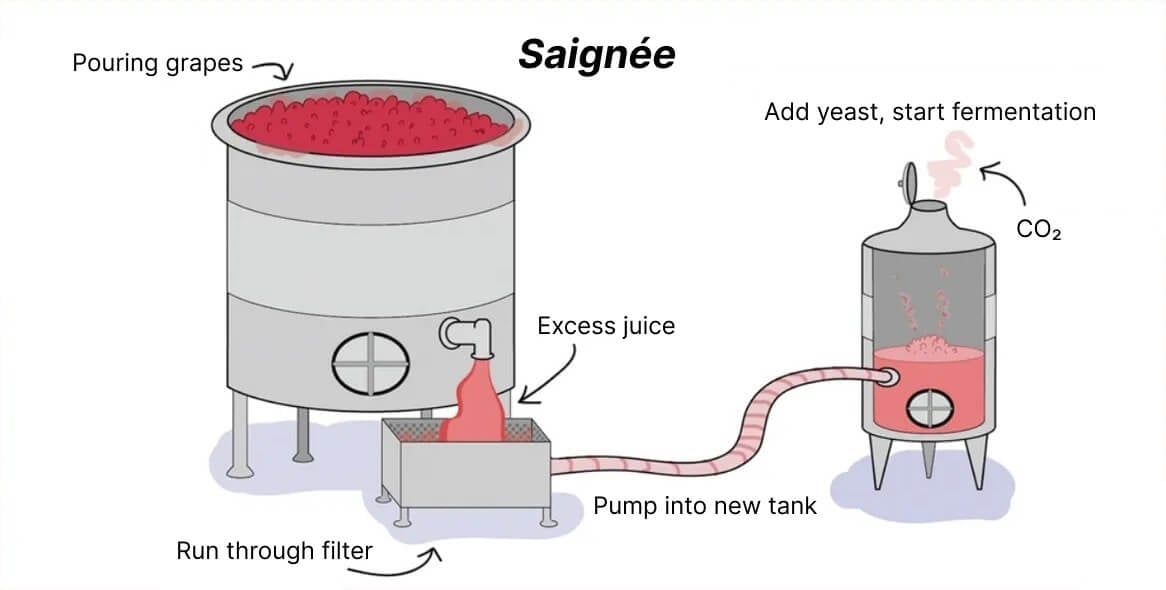
There are two main methods of getting that gorgeous pink colour from red grapes: saignée and direct press.
Saignée comes from the French verb “to bleed”. This method involves “bleeding off” some of the juice from a vat of red wine early in the fermentation process before the grape skins impart their vivid colour and bountiful tannins. This also has a desirable knock-on effect - the red wine that stays in the vat often has a more intense colour, due to a higher ratio of skins to juice.
Direct Press is simply a more straightforward way of making rosé. Red grapes are brought to the winery and pressed, in order to extract the juice from the skins. The skins and juice are separated almost straight away, resulting in that appealing pink colour.
In some cases, rosé is also created by blending a small amount of red wine with white wine. This method is forbidden in most French appellations, except for Champagne, where they create beautiful sparkling rosés by blending Chardonnay with small amounts of Pinot Noir/Meunier. There is much debate among wine-makers about which method gives the best rosé, but in the end, it won’t affect you (the drinker!) all that much.
Types of Rose Wine
When all of the pressing, bleeding, blending and fermenting is over and done with, you end up with a delicious bottle of rosé. Of course, rosé wines are about at diverse as red or white wine, so they can lie anywhere on the wine spectrum - light pink, dark pink, bone dry, semi-sweet, as sweet as a slice of strawberry cheesecake, effervescent, or intensely sparkling.
In addition to all of the potential rosé types, this style of wine can be known by many different names, and created with a variety of different grapes. In any store, you might see rosé wine bearing the name vin-gris (grey wine), blanc-des-noir (white from black), rosado (in Spain) or rosato (in Italy). You may also see an Italian wine called Ramato, which is essentially a copper-coloured rosé (although purists may argue that it’s not rosé) made from Pinot Grigio with extended skin contact.
So, wherever wine is made, rosé is made too. With a few rare exceptions, it is made with red grapes. Pretty much every native Italian red grape can be made into rosé. In France, Cabernet Sauvignon, Cabernet Franc, Syrah, Grenache and Mourvedré are popular varietals, as well as Pinot Noir and Meunier. You can find pink wine from Spain made with Tempranillo, Garnacha, or much rarer varietals such as Ondarrabi from the Basque country and Listán Negro from the Canary Islands. In the New World, grapes like Shiraz, Zinfandel and Merlot are more popular, but you can find rosé in Australia, America and South Africa made from any of the grapes listed above.
The point is: rosé is not a one-trick pony. It has just as many intricacies and styles as red or white wine. This is good news for wine connoisseurs, but slightly confusing for the average consumer. Next, to make your life easier, we’re going to take a look at some of the main regions and wineries to look out for while shopping.
Popular Rose Wine Regions and Their Top Wines to Try
Although rosé wines are made all over the world, there are a few specific regions that rank above the rest - both in terms of the quality of their wine, and how they dominate the market. Provence has some of the best rosé wine that you can buy and is definitely the number one place to begin your journey. However, to take an all-encompassing view of the rosé scene, we’ll also go through some wines from other parts of the world.

A Look at Italian Rosato
In Italy, there is a smattering of quality regions to explore. On the northern end of the peninsula, Piedmont produces some fantastic rosé from Nebbiolo and Freisa, and Friuli has some wonderful examples of Ramato, made from Pinot Grigio. As you move down the eastern coast, you can also start looking at pink wine from Veneto and Abruzzo, which are Italy’s rosé powerhouses.
In general, Italian rosé is more vibrant and robust than French, and producers tend to keep it dry - this is thanks to those bold, rustic grapes, like Nebbiolo, Corvina and Montepulciano, and the intense Italian midday sun.
If we had to recommend just one Italian rosé that typifies the country and offers something a little different to those pale pink Provençal wines, we would head much further south - as far south as it gets. This Rosato from the slopes of Mount Etna is a wonderfully refreshing wine, crafted from the Sicilian grape Nerello Mascalese. It’s a perfect balance of quality and affordability, and a must-have on a summery evening.