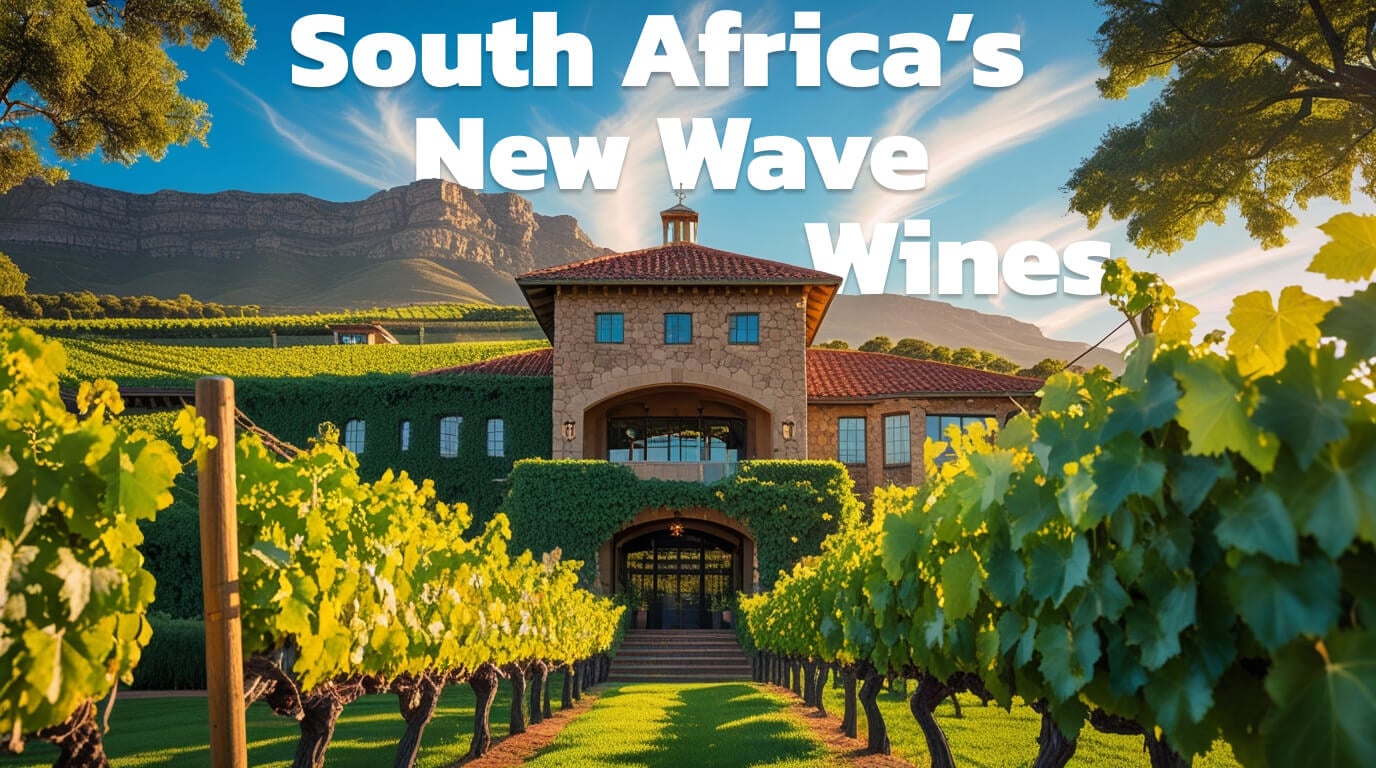
From producing one of the most prized wines in the world to enduring decades of economic stagnation and enforced bulk wine production, South Africa’s wine industry hasn’t had the easiest start in life. Yet thanks to a new generation of bold, pioneering winemakers, this up-and-coming nation is now regarded as “one of the most exciting wine producers of the moment” in the words of top wine critic Tim Atkin.
In this article we’ll take a closer look at South Africa’s New Wave wines and get to know the iconic producers and key regions pushing the country’s wine industry in exciting new directions.
A Short History of South African Wine
Winemaking in South Africa arrived with the Dutch colonial administrator Jan van Riebeeck who planted the first vines at the Cape of Good Hope in 1655. South Africa’s very first wine was made from these vines in 1659. For the next few decades winemaking struggled to get off the ground due to a lack of viticultural knowledge amongst the region’s farmers.
Things began to change in the 1680s when French Huguenots fleeing religious persecution settled at the Cape. Many were skilled winemakers, adapting their techniques to their adopted homeland. This early golden age of South African winemaking gave rise to the great winery of Constantia which was founded in 1685 by the first governor of the Cape, Simon van der Stel. To this day they still produce their legendary dessert wine Klein Constantia Vin de Constance which was highly sought after in the 1700s and 1800s by the likes of Napoleon Bonaparte and King Louis-Philippe of France.
Declining Demand & The Phylloxera Crisis
In 1806 the British took control of the Cape Colony during the Napoleonic Wars. Cape winemakers suddenly had access to a lucrative trade network and wine production flourished in response to growing demand from European markets. But these halcyon days would be cut short by three new threats.
The first came in the 1860s when Britain reduced tariffs on French wines, making them a far more attractive choice than wines from distant South Africa. Then came the discovery of the devastating phylloxera pest on the Cape in 1886 which wiped out entire estates. The final blow came with the Anglo-Boer war which began in 1899.
Wine Cooperatives & Bulk Production
The Cape’s wine industry slowly began to recover in the first half of the 20th century as estates replanted their vines and began focusing on other markets. This was cemented by the foundation of the KWV (Koöperatieve Wijnbouwers Vereniging) cooperative in 1918 which introduced such strict viticultural regulations that it was nicknamed the KGB.
These rules favored higher yields over quality, drawing the South African wine industry down the path to bulk production of cheap wines. This trend for mass market wines became even more pronounced during Apartheid when sanctions cut South Africa off from international markets.
The South African New Wave
In the last few decades of Apartheid South African winemakers began to invest and experiment with quality, terroir-driven viticulture. The end of Apartheid in 1994 once again opened the industry up to the global wine market, bringing in new opportunities and fresh optimism. A new generation of pioneering winemakers was quick to take up the challenge, experimenting with classic varietals like Pinotage and Chenin Blanc as well as introducing new techniques and methods like natural fermentation and minimal intervention in the winery.
The Top South African Grape Varieties
Chenin Blanc
Chenin Blanc is one of the big winners of the New Wave revolution in South African winemaking. This white grape varietal was traditionally planted in very high yielding vineyards and used in inexpensive bulk wines. In recent years winemakers have turned their attention to the nation’s treasure trove of 50-100 year old Chenin vines which tend to produce deeply-concentrated, structured and ageworthy white wines. It appears both in young and fresh styles as well as richer, barrel-aged whites.
- A great example is The Bernard Series Old Vine Chenin Blanc from Bellingham winery in Franschhoek which was founded back in 1693 when Gerrit Janz van Vuuren and his wife planted the first vines on the estate. Bernard and Fredagh Podlashuk bought the property in 1943 and helped nurse it back to health. In subsequent years they played a foundational role in the New Wave South Africa, releasing the first Cape rosé in 1949 followed rapidly by the Premier Grand Cru in 1951 and the first South African pure Shiraz in 1956. The terroir and old vines tends to produce a richer, more intense and complex style of Chenin Blanc that has the potential to age beautifully in the cellar over the next few years.